Photograph: © Unknown (stock photograph), Not verified.
A widespread elapid of the lowlands, famous for the hood it spreads when it feels threatened, and deeply woven into Sri Lankan culture.
Appearance
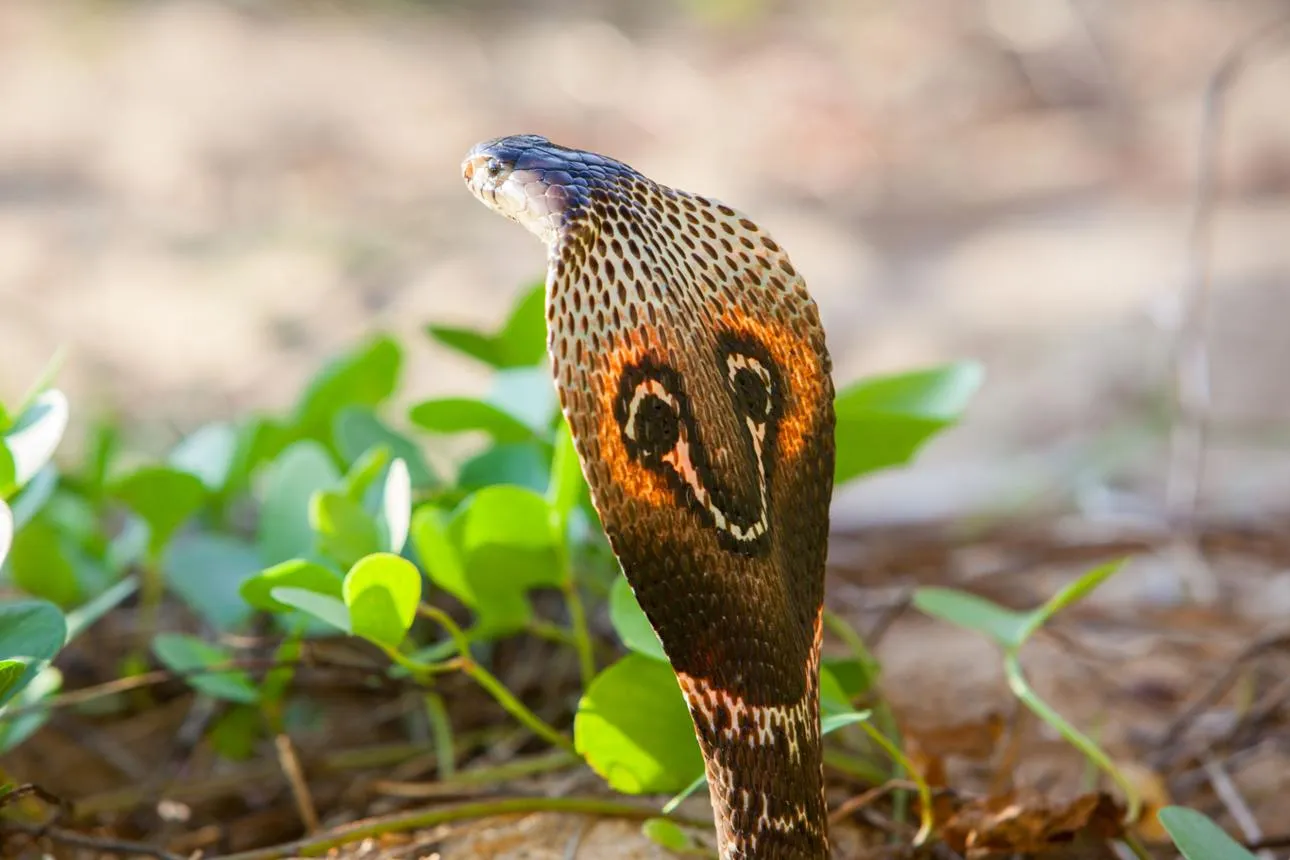
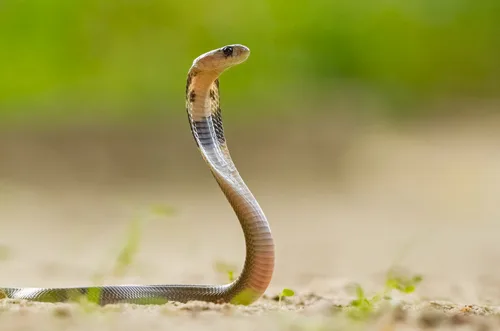
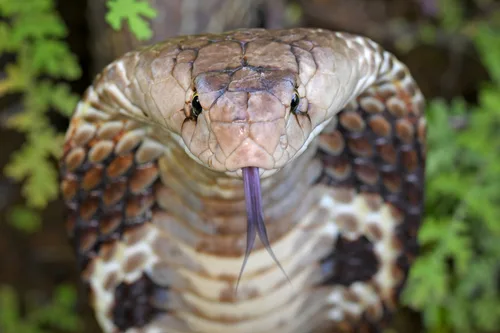
A medium-sized snake with smooth, glossy scales. When disturbed it raises the front part of its body and spreads its neck ribs into a hood. Many individuals show a pale, spectacle-like mark on the back of the hood.
Documented variation
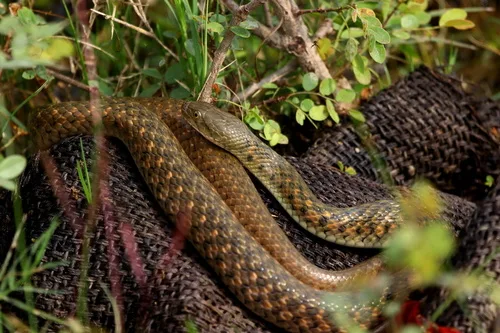
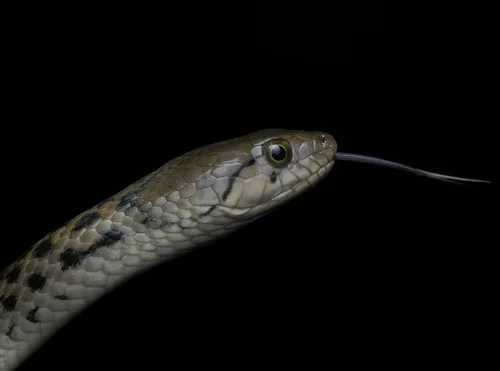
Colour ranges from pale yellowish brown to dark brown or almost black. The hood marking can be bold, faint or broken, and juveniles may look noticeably different from adults.
Ecology and diet
Feeds mainly on rodents, frogs and toads. Often shelters in termite mounds, rodent burrows and gaps in walls, which brings it close to farms and villages.
Behaviour
Active mostly around dusk and at night, though it is also seen by day. It usually retreats when given space.
Defensive behaviour
Raises its head, spreads the hood and hisses. It may make bluff strikes before biting if it is cornered or handled.
Distribution in Sri Lanka
Recorded across much of the island's lowlands in both the wet and dry zones.
Identification limitations
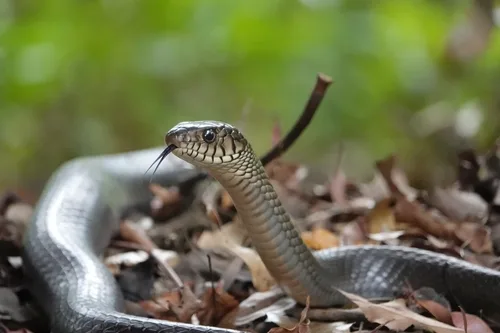
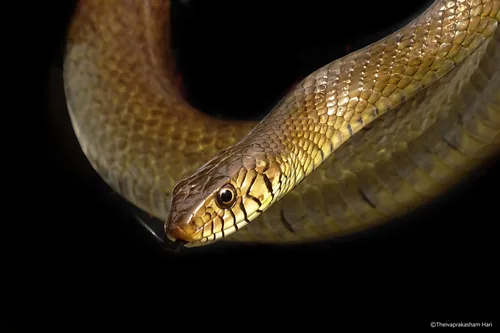
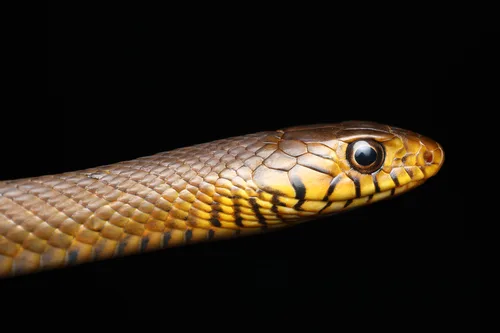
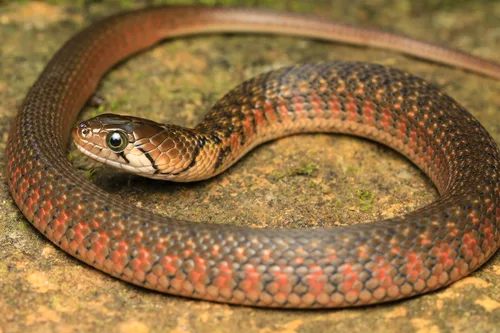
A cobra does not always display its hood, and other snakes, such as rat snakes and keelbacks, can raise their heads or flatten their necks. Never use the presence or absence of a hood to decide whether a snake is dangerous.
No single feature guarantees an identification, or tells you whether it is safe to approach a snake.
Folklore and curiosities
The naga (cobra) holds a respected place in Sri Lankan Buddhist and Hindu traditions. A widely told Buddhist story describes Mucalinda, a naga king, sheltering the meditating Buddha from a storm with his hood. Many families avoid harming cobras for these reasons.