Photograph: © Unknown photographer, Not verified.
Sri Lanka's largest snake, a non-venomous constrictor of the dry zone's forests and wetlands.
Appearance
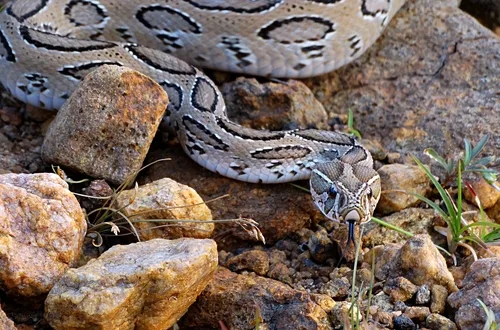
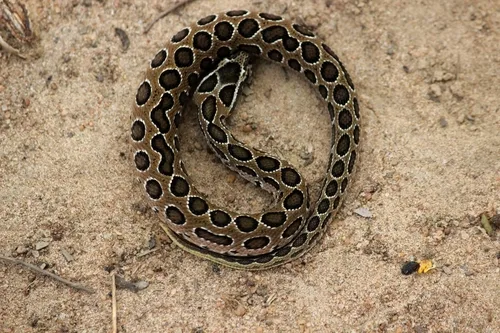
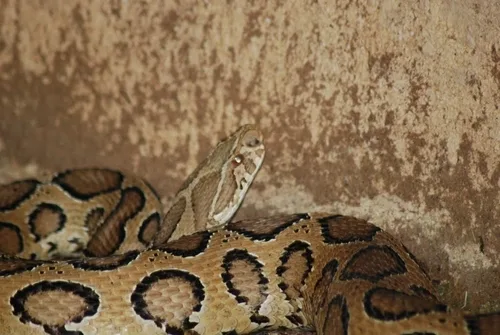
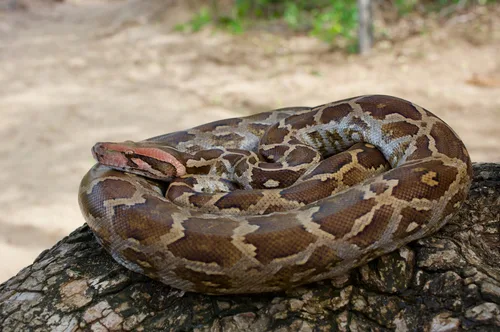
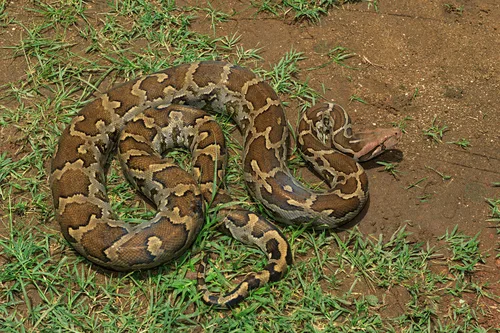
Heavy and muscular, pale tan to greyish with large, dark-edged brown blotches along the back and an arrowhead-shaped mark on top of the head.
Documented variation
Background colour and blotch shape vary between individuals.
Ecology and diet
Constricts mammals, birds and reptiles. Large individuals can take surprisingly large prey.
Behaviour
Slow-moving on land, often travelling in a straight line; also swims well. Mostly active at night.
Defensive behaviour
Hisses and may bite if handled. Not venomous, but large pythons can cause serious bite wounds.
Distribution in Sri Lanka
Recorded mainly in the dry zone lowlands, often near water.
Identification limitations
Young pythons are sometimes confused with Russell's vipers because of their blotched pattern.
No single feature guarantees an identification, or tells you whether it is safe to approach a snake.
Folklore and curiosities
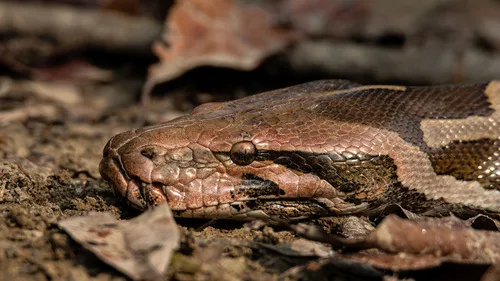
A common belief claims pythons hypnotise prey with their stare. There is no evidence for this; like other snakes, pythons have no eyelids and so seem to stare constantly.