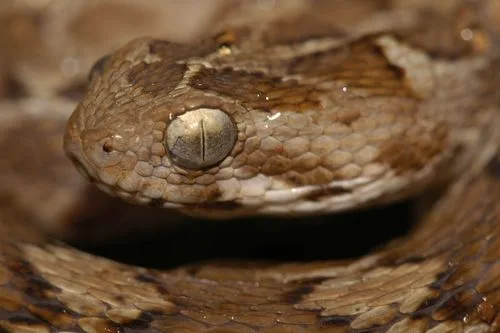
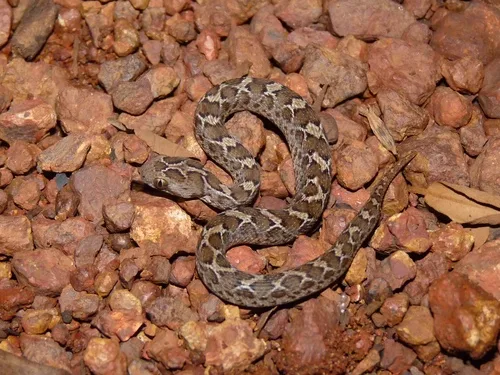
Photograph: © Unknown photographer, Not verified.
A small viper of sandy, dry coastal scrub, known for the rasping warning sound made by its own scales.
Appearance
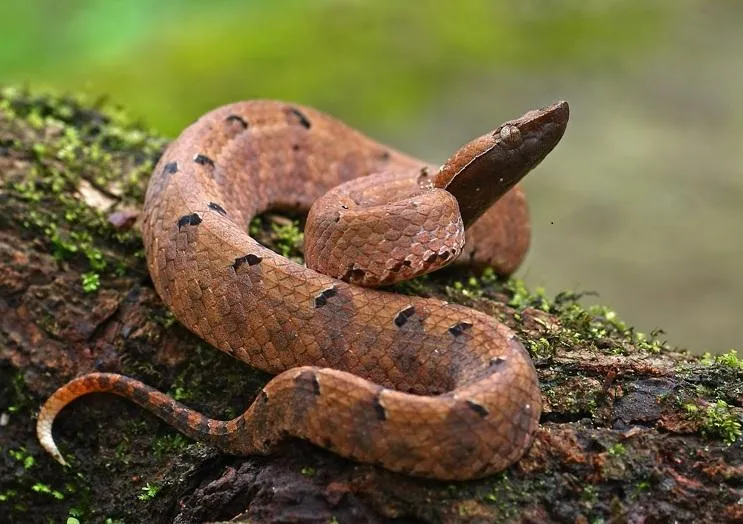
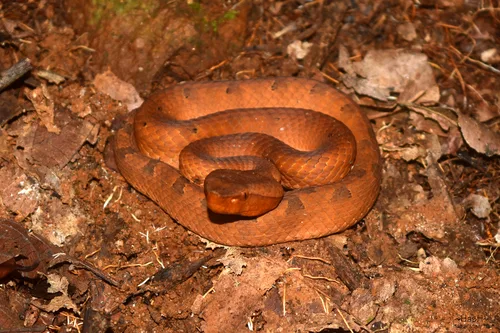
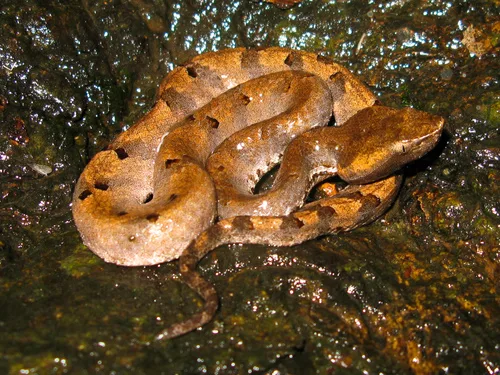
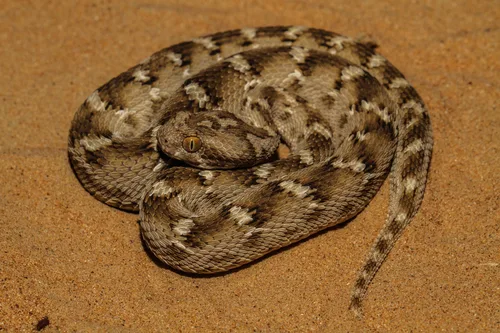
A small, rough-scaled viper with a pear-shaped head. Usually sandy or brownish with pale, wavy or zigzag markings along the sides and darker blotches on the back.
Documented variation
Colour tends to match local soil and sand.
Ecology and diet
Feeds on small vertebrates and invertebrates, including scorpions, frogs and lizards.
Behaviour
Mostly nocturnal; often hides partly buried in sand or under low vegetation.
Defensive behaviour
Forms C-shaped coils and rubs its saw-edged side scales together, producing a rasping sound. Strikes quickly if pressed.
Distribution in Sri Lanka
Restricted to dry coastal areas of the north and north-west of the island.
Identification limitations
Its small size and camouflage make it easy to miss or to confuse with other small brown snakes.
No single feature guarantees an identification, or tells you whether it is safe to approach a snake.
Folklore and curiosities
No documented folklore has been added for this species yet.